
Start with ₹500 | No Prior Knowledge Needed | Middle-Class Friendly

1. Why Every Indian Must Invest: The Mindset Shift {#mindset}
The Inflation Monster is Eating Your Savings
Fact: If your savings earn 4% (in savings account) and inflation is 6%, you’re losing 2% every year. ₹1 lakh today will be worth only ₹74,000 in 5 years in purchasing power.
Three Types of People in India:
- The Saver: Keeps money in FD/Savings (Loses to inflation)
- The Speculator: Trades stocks/bitcoin (90% lose money)
- The Investor: Invests systematically (Builds real wealth)
Which one are you? This guide helps you become The Investor.
The Power of Starting Early:
*A 25-year-old investing ₹5,000/month at 12% = ₹3.4 crore at 60*
*A 35-year-old starting same = ₹1.1 crore at 60*
*10 years delay = ₹2.3 crore less*
You don’t need to be rich. You need to be consistent.
2. The Indian Investment Pyramid: What to Do FIRST {#pyramid}
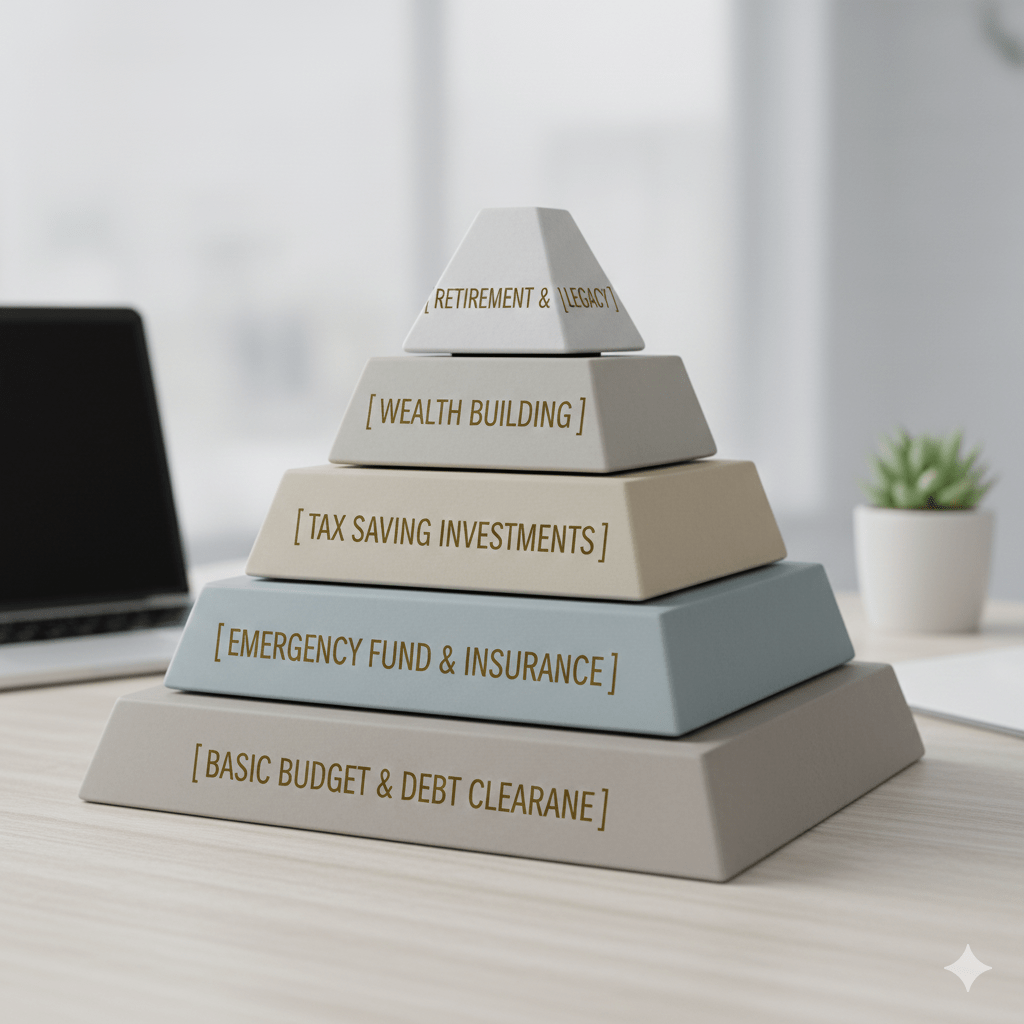
Layer 1: Foundation (Month 1-3)
Emergency Fund: 6 months of essential expenses in liquid mutual fund
Health Insurance: Minimum ₹5 lakh cover (Ayushman Bharat + top-up)
Term Insurance: If you have dependents, ₹1 crore cover (costs ₹500-1000/month)
Layer 2: Core Investments (Month 4-24)
PPF: ₹500/month for retirement safety
ELSS: Tax saving + growth (₹500/month minimum)
Index Fund SIP: ₹1000/month for long-term wealth
Debt Fund: For goals 3-5 years away
Layer 3: Advanced (Year 3+)
Direct Stocks: Only if you enjoy researching companies
Real Estate (REITs): Start with ₹10,000 in REIT mutual funds
International Funds: 10-20% portfolio for diversification
3. Your First ₹500: Where It Actually Goes {#first500}
Scenario Analysis:
If you invest ₹500/month for 30 years at 12%:
- Total Invested: ₹1,80,000
- Final Value: ₹17,60,000
- Growth: ₹15,80,000 (That’s your money working for you!)
Where Should Your First ₹500 Go?
- Emergency Fund Building (Months 1-6): Liquid fund SIP
- After Emergency Fund: Split ₹500 as:
- ₹300 in Index Fund SIP
- ₹200 in PPF (through monthly RD, yearly transfer)
The “Pizza Rule”:
“Every time you order a ₹500 pizza, invest ₹50 first. In 20 years, that pizza money could buy you a car.”
4. Understanding Your Risk Appetite: Simple 3-Question Test {#risk}
Question 1: If your investment falls 20% in 3 months, you:
A) Panic and withdraw everything (Low Risk)
B) Worry but hold (Medium Risk)
C) See it as buying opportunity (High Risk)
Question 2: Your investment time horizon:
A) 1-3 years (Low Risk)
B) 3-7 years (Medium Risk)
C) 7+ years (High Risk)
Question 3: Your primary goal:
A) Don’t lose money (Low Risk)
B) Beat FD returns (Medium Risk)
C) Build significant wealth (High Risk)
Most Indians Score: Medium Risk (B-B-B). This means:
- 60% in equity (stocks/mutual funds)
- 30% in debt (FDs, bonds)
- 10% in gold
5. The Big 6 Investment Options Explained {#options}
COMPARISON TABLE:
| Investment | Min Amount | Lock-in | Expected Return | Risk | Best For | How to Start |
|---|---|---|---|---|---|---|
| PPF | ₹500/year | 15 years | 7-8% | Very Low | Retirement, child future | Post office/bank |
| Nifty Index Fund | ₹100/month | None | 10-12% | Medium | Long-term wealth | Groww/Zerodha app |
| ELSS | ₹500/month | 3 years | 10-12% | Medium | Tax saving + growth | Mutual fund app |
| Senior Citizen FD | ₹1000 | 5 years | 7-8% | Very Low | Retired parents | Bank |
| Sovereign Gold Bond | 1 gram | 8 years | Gold+2.5% | Low | Diversification | Demat account |
| NPS | ₹500/month | Till 60 | 8-10% | Medium | Extra retirement | Bank/NPS portal |
Detailed Breakdown:
1. Public Provident Fund (PPF) – Your Retirement Anchor
What: Government-backed, tax-free returns
Why: Guaranteed returns, tax benefits (EEE)
Ideal for: Risk-averse beginners, retirement corpus
Start with: ₹500/month through RD, transfer yearly
Pro Tip: Open for your child too – 15-year compounding is magical
2. Nifty 50 Index Fund – The “Bet on India” Fund
What: Invests in India’s top 50 companies automatically
Why: Low cost (0.1% vs 1-2% for active funds), beats most fund managers
Returns: Historical 12-14% over 10+ years
Start: ₹500 SIP on Groww/Zerodha
Mindset: “I believe India will grow in next 20 years”
3. ELSS – Tax Saving That Actually Grows
Tax Benefit: ₹1.5 lakh under Section 80C
Lock-in: 3 years (shortest among 80C options)
Risk: Medium (invests in stocks)
Best Funds: Axis, Mirae Asset, Quant
Strategy: Start SIP in November to average costs
4. Gold – But The Smart Way
Avoid: Physical gold (making charges, safety issues)
Choose: Sovereign Gold Bonds (SGBs)
Benefits: 2.5% extra interest, tax-free if held 8 years
Allocation: 5-10% of portfolio
When to Buy: Diwali/fall season (traditional, plus bonus)
5. NPS – Extra Retirement Boost
For: Salaried employees wanting more than PF
Tax Benefit: Extra ₹50,000 under 80CCD(1B)
Flexibility: Choose equity/debt mix
Withdrawal: 60% tax-free at 60
Start: Tier 1 account via bank
6. Debt Mutual Funds – For Short-Term Goals
When: Goals 1-5 years away (car, vacation, house down payment)
Better than FD: More tax-efficient for 3+ years
Types: Liquid (emergency), Ultra Short-term (1-3 years)
Returns: 6-7% with low risk
6. Common Beginner Mistakes & How to Avoid Them {#mistakes}
Mistake 1: Waiting for “Perfect Time” to Start
Reality: The best time was yesterday. Second best is today.
Solution: Start ₹100 SIP TODAY. Increase later.
Mistake 2: Chasing Past Performance
Example: “This fund gave 50% last year, I’ll invest”
Reality: Past ≠ Future. Top performers often become laggards.
Solution: Choose index funds or consistent performers.
Mistake 3: Too Many Small Investments
Problem: ₹1000 in 10 different funds = ₹10,000 but messy
Solution: 3-4 funds maximum:
- Nifty Index Fund
- ELSS (for tax)
- PPF (for safety)
- Debt fund (for goals)
Mistake 4: Ignoring Insurance
Story: Ramesh, 35, invested ₹20 lakhs. Heart attack – medical bill ₹15 lakhs. Portfolio destroyed.
Solution: Health insurance FIRST, then investments.
Mistake 5: Checking Portfolio Daily
Psychology: Daily fluctuations cause panic
Rule: Check quarterly. Review annually.
Analogy: Don’t dig up a seed daily to check growth.
7. Your 12-Month Action Plan {#action}
Month 1-3: The Foundation
- Week 1: Calculate emergency fund need (6 × monthly expenses)
- Week 2: Open liquid fund SIP for emergency fund
- Week 3: Buy term insurance (if have dependents)
- Week 4: Buy health insurance (if not from employer)
Month 4-6: First Investments
- Start ₹500 SIP in Nifty Index Fund
- Open PPF account (₹500 deposit)
- Create “Goals Sheet” (Car, house, education, retirement)
Month 7-9: Tax Planning
- Start ₹500 ELSS SIP for tax saving
- Submit investment proofs to employer
- Plan next year’s tax-saving investments
Month 10-12: Review & Scale
- Review all investments
- Increase one SIP by 10%
- Add gold (SGB) if needed
- Plan next year’s goals
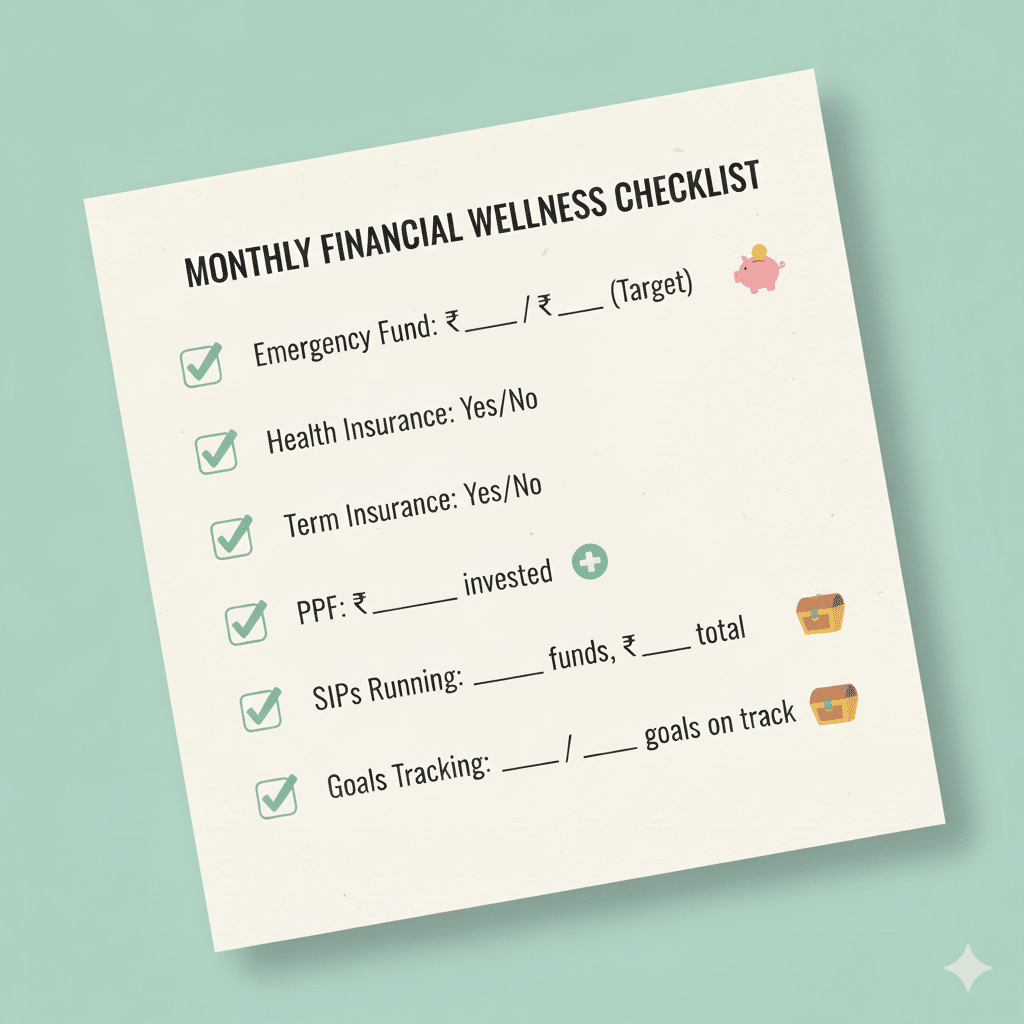
Monthly Habit Tracker:
8. FAQs: Real Questions from Beginners {#faq}
Q1: “I’m 40. Is it too late to start?“
A: The best time was earlier. Second best is today. At 40, focus on:
Aggressive debt funds (60%)
Equity funds (40%)
Higher monthly investment
Delay retirement by 2-3 years if neededQ2: “What if I need money suddenly?“
A: That’s why Layer 1 (emergency fund) exists. Don’t invest money needed in 1-3 years. Keep in liquid/debt funds.
Q3: “How do I choose between so many mutual funds?”
A: Start with:
One Nifty 50 Index Fund
One ELSS fund (for tax)
One liquid fund (emergency)
That’s enough for first 2 years.Q4: “Should I invest during market highs?”
A: Yes, through SIP. SIP removes timing risk. Continue during highs and lows.
Q5: “How much return to expect realistically?”
A: After inflation (6%):
Equity: 4-6% real returns
Debt: 1-2% real returns
Gold: 1-3% real returns
Real returns = Nominal returns – InflationQ6: “What about cryptocurrency?”
A: For beginners: Avoid or allocate maximum 1-2% of portfolio as “learning money.” Consider it entertainment budget, not investment.
Q7: “My friend makes money trading. Should I?”
A: Ask to see 3-year portfolio statement, not screenshots. 90% lose money trading. Learn investing first. Paper trade for 6 months if curious.
Q8: “How much should I invest monthly?”
A: Start with whatever you can:
₹500 if that’s all you have
Ideal: 20% of take-home salary
Maximum: 50% if living with parents and no responsibilities
📚 Recommended Next Reads:
- Salary Slip Decoded: PF, TDS, HRA Explained
- Emergency Fund: How to Save 6 Months of Expenses
- SIP vs Lumpsum: Which is Better for You?
- Real ₹40,000 Budget: A Middle-Class Case Study
🎯 Final Checklist Before You Start:
Week 1 Tasks:
- Calculate emergency fund target
- Open liquid fund SIP (even ₹1000/month)
- Review insurance coverage
Month 1 Tasks:
- Start one SIP (Nifty Index Fund, ₹500)
- Open PPF account (₹500 deposit)
- Set up auto-debit for all investments
Quarter 1 Review:
- Emergency fund progress
- SIP consistency
- Insurance in place
- Learning: Read one finance book/article weekly
🌟 Remember These Truths:
- You don’t need to be an expert – Just consistent
- ₹500 today > ₹1000 tomorrow – Time is your biggest asset
- Mistakes will happen – Learn, don’t quit
- Compare with yourself yesterday – Not with neighbor’s car
- Financial peace > Fancy lifestyle – Sleep well at night
🚀 Your Journey Starts Now:
Today: Bookmark this page
This Week: Start ₹500 SIP (any fund)
This Month: Build emergency fund
This Year: Become a confident investor
Share your starting story in comments below! What’s your first investment going to be? Let’s build this community together.
📞 Need Personalized Help?
While I can’t give individual advice (I’m not SEBI registered), our community in comments can share experiences. For complex situations, consult a fee-only financial planner (not commission-based).
Last Updated: Dec 2025
Next Review: Feb 2026 (Tax changes, new rules)
Share This Guide: Help a friend start their journey!
Leave a Reply