How to Use Credit Cards to Build Wealth (Not Destroy It) – Complete Guide with Real Indian Examples
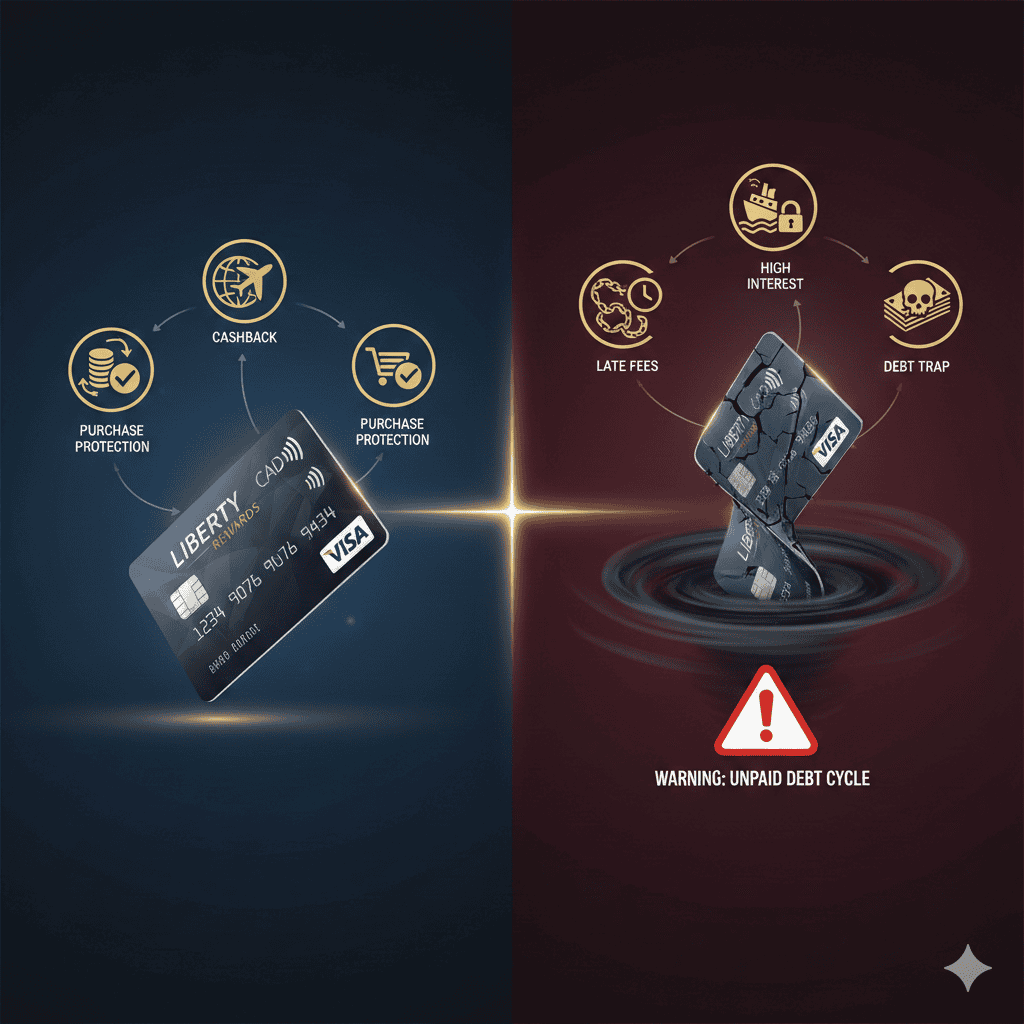
Scene 1: Priya buys a ₹50,000 refrigerator on EMI using her credit card. She pays ₹5,000/month for 12 months. Total paid: ₹60,000. She paid ₹10,000 extra for “free” EMI.
Scene 2: Rohan buys same refrigerator for ₹45,000 (cash discount). Uses credit card, pays full next week. Gets ₹1,350 cashback. Effective cost: ₹43,650. He saved ₹6,350 compared to Priya.
Same card. Different users. Different outcomes.
In India, credit cards are either worshipped as “free money” or feared as “debt ka pitara.” The truth? They’re just tools – neither good nor bad. It’s how YOU use them.
If you’ve ever:
- Been confused by “interest-free” EMI offers
- Paid late fees because you forgot due date
- Wondered if credit cards affect your loan eligibility
- Or simply avoided cards thinking “cash is king”
This guide is for you. Let’s decode credit cards for the Indian middle-class reality.
Part 1: The Two Types of Credit Card Users in India
The “Debt Trapped” User (90% of Problems):
- Uses card for wants, not needs
- Pays minimum due only
- Falls for “interest-free” EMI without reading terms
- Has multiple cards for “emergencies” (that become expenses)
- Result: Pays 24-49% effective interest, credit score damaged
The “Wealth Builder” User (Smart 10%):
- Uses card like debit card (spends only what they have)
- ALWAYS pays full amount before due date
- Strategically uses offers to save money
- Uses cards to build credit score for future loans
- Result: Gets free flights, cashback, better loan rates
Which one will you be after reading this guide?
Part 2: The 5 Deadly Credit Card Myths (Busted with Indian Examples)
Myth 1: “Interest-Free EMI is Actually Free”
Reality: The “interest” is added as “processing fee” upfront. Plus, you lose cash discounts.
Math Truth:
- Product MRP: ₹30,000
- Cash price: ₹27,000 (10% discount)
- 6-month “interest-free” EMI: ₹5,000/month + ₹1,500 processing fee
- Total paid: ₹31,500 (₹4,500 MORE than cash price!)
Smart Move: Take cash discount, pay with card for rewards, pay full next week.
Myth 2: “Minimum Due Payment is Enough”
Reality: Paying minimum = 49% interest trap.
Example: ₹50,000 bill, minimum due ₹5,000 (10%)
- If you pay only minimum every month
- Time to clear: 5+ years
- Interest paid: ₹40,000+ (80% extra!)
- Credit score: Destroyed
Rule: NEVER pay just minimum. Pay FULL. Always.
Myth 3: “More Cards = More Credit = Better”
Reality: 2-3 well-chosen cards > 10 random cards.
Problems with multiple cards:
- Annual fees add up (₹500-₹5,000 per card)
- Higher chance of missed payments
- Hard inquiries affect credit score
- Temptation to overspend
Ideal: 1 primary card + 1 backup. Max 3 total.
Myth 4: “Credit Cards Ruin CIBIL Score”
Reality: Properly used cards BUILD CIBIL score.
How credit score is calculated:
- 35% Payment History (Pay on time = Good)
- 30% Credit Utilization (Use <30% of limit = Good)
- 15% Credit History Length (Older cards = Good)
- 10% Credit Mix (Cards + Loans = Good)
- 10% New Credit (Few applications = Good)
Paradox: No credit history = Bad for loans. Good credit card usage = Excellent for loans.
Myth 5: “Cards Are Only for Rich People”
Reality: Cards offer middle-class protections cash doesn’t.
Middle-Class Benefits:
- Fraud Protection: Someone steals card? Call bank, limit liability to ₹10,000 (RBI rule)
- Warranty Extension: Many cards add 1 year to electronic warranties
- Purchase Protection: 90-day theft/damage coverage
- Travel Insurance: Free on flight bookings
- Price Protection: If price drops within 30 days, get refund
Part 3: How to Choose YOUR First Credit Card (Indian Bank Comparison)
The Middle-Class Card Selection Framework:
| If You Mostly Spend On… | Best Card Type | Examples (Annual Fee) | Ideal For |
|---|---|---|---|
| Groceries & Fuel | Cashback Cards | SBI SimplyCLICK (₹499), Axis Ace (₹499) | Family shopping |
| Online Shopping | E-commerce Cards | Amazon Pay ICICI (Free), Flipkart Axis (₹500) | Frequent Amazon/Flipkart users |
| Travel & Dining | Rewards Cards | HDFC Regalia (₹2,500), ICICI Coral (₹500) | Business travel, eating out |
| Everything (All-rounder) | Entry-level Cards | Kotak League (Free first year), Citi Cashback (₹500) | First card, general use |
The “LIFE” Test Before Applying:
Limit needed: 1-2 months salary maximum
Income proof: 3 months salary slips needed
Fees: ₹0-₹500 first year ideal
Eligibility: Check pre-approved offers in net banking first
Pro Tip for First-Timers:
Start with FD-backed secured credit card.
How: Open ₹25,000 FD, get ₹20,000 credit limit.
Benefits: No rejection, builds credit history, converts to regular card in 1 year.
Banks offering: SBI, HDFC, ICICI, Axis.
Part 4: The Smart User’s 7 Golden Rules (Printable Checklist)
RULE 1: The 30% Utilization Rule
Never use more than 30% of your limit.
- Limit: ₹1,00,000
- Max monthly spend: ₹30,000
- Why: Keeps credit score healthy, prevents overspending
RULE 2: The “Bill Date” Ritual
Set 3 calendar reminders:
- Bill generation date + 1 day: Check bill
- Due date – 7 days: Arrange payment
- Due date – 1 day: Confirm payment cleared
RULE 3: The “Need vs Want” Filter
Before swiping, ask: “Would I buy this with cash right now?”
If NO → Don’t use card.
Credit card = Payment method, NOT additional income.
RULE 4: The Annual Fee Negotiation
60 days before renewal:
- Call customer care: “I’m considering closing due to fees”
- Ask for: Fee waiver OR fee reversal after spends
- Most banks waive for loyal customers
RULE 5: The Reward Redemption Calendar
- Air Miles: Redeem before devaluation (usually annually)
- Cashback: Automatically credited, check statement
- Points: Redeem for vouchers during festival sales (better value)
RULE 6: The Emergency Card Protocol
Keep one card ONLY for:
- Medical emergencies
- Car breakdowns
- Family emergencies
Lock it in cupboard, don’t carry daily.
RULE 7: The Annual Review
Every Diwali:
- Check total benefits received vs fees paid
- Review if card still matches spending pattern
- Close unused cards (after clearing balance)
- Negotiate higher limit if needed
Part 5: Real Middle-Class Scenarios & Solutions
Scenario 1: “I have ₹50,000 credit card debt at 36% interest”
Solution: Debt Snowball Method
- List cards by balance (smallest to largest)
- Pay minimum on all, extra on smallest
- When smallest paid, roll payment to next
- Example:
- Card A: ₹10,000 (₹2,000/month)
- Card B: ₹20,000 (₹1,000/month)
- Card C: ₹20,000 (₹1,000/month)
- Month 1-5: Focus Card A
- Month 6-15: Focus Card B (now paying ₹3,000/month)
- Month 16-22: Focus Card C (now paying ₹4,000/month)
- Debt free in 22 months
Scenario 2: “My card offers 0% EMI on phone. Should I take?”
Checklist Before Saying YES:
- Is there cash discount I’m losing? (Usually 5-10%)
- What’s the processing fee? (1-3% usually)
- Can I pay full without affecting emergency fund?
- Will I lose reward points by taking EMI?
Usually: Take cash discount, pay with card, pay full. Better deal.
Scenario 3: “I travel twice a year. Which card?”
Choose based on spending:
- If ₹3-5 lakh/year: HDFC Regalia (free lounge, travel points)
- If ₹1-3 lakh/year: Axis Atlas (good mile conversion)
- If <₹1 lakh/year: ICICI Amazon Pay (no fee, good cashback)
Pro Tip: Book flights directly with airline (not travel portals) for better card benefits.
Part 6: Credit Cards vs Other Options (When to Use What)
The Payment Method Matrix:
| Purchase Type | Best Payment Method | Why |
|---|---|---|
| Big Electronics | Credit Card (pay full next month) | Warranty extension, price protection |
| Medical Emergency | Credit Card + Health Insurance | Immediate payment, insurance claim later |
| Monthly Groceries | Debit Card/UPI | No temptation to overspend |
| Online Subscriptions | Credit Card | Auto-pay, easy cancellation |
| Small Local Purchases | Cash/UPI | Quick, no fees |
Credit Card vs Personal Loan:
For ₹2 lakh emergency:
- Credit Card Cash Advance: 49% interest, immediate
- Personal Loan: 10-15% interest, 1-3 days processing
- Winner: Personal Loan (if you have time)
Credit Card vs Buy Now Pay Later (BNPL):
For ₹10,000 purchase:
- Credit Card EMI: 14-24% after fees, affects credit score
- BNPL (Simpl, Lazypay): 0% if paid in 15-30 days, higher after
- Winner: BNPL for very short term, Card for longer
Part 7: Your 30-Day Credit Card Makeover Challenge
Week 1: Assessment
- Day 1: List all cards with limits, balances, due dates
- Day 3: Check CIBIL score (free on CRED, OneScore)
- Day 5: Calculate total debt & interest being paid
- Day 7: Set goal (e.g., “No new debt this month”)
Week 2: Optimization
- Day 8: Negotiate annual fee on one card
- Day 10: Set up auto-pay for full amount
- Day 12: Remove card from online shopping sites
- Day 14: Create “Need vs Want” spending tracker
Week 3: Habit Building
- Day 15: Use card only for planned purchases
- Day 18: Pay current balance (not just due)
- Day 21: Review reward points, plan redemption
- Day 23: Educate family member about smart usage
Week 4: Review & Plan
- Day 25: Check if avoided unnecessary purchases
- Day 27: Calculate interest saved by paying full
- Day 28: Plan next month’s card usage
- Day 30: Celebrate small wins!
Part 8: When to SAY NO to a Credit Card
Red Flags – Don’t Get a Card If:
- You’re saving for big purchase in 6 months (temptation risk)
- You have unstable income (freelancers, commission-based)
- You’re recovering from debt (1 year clean record first)
- You can’t track expenses (use cash/UPI until you can)
- You’re under 21 (legal but responsibility heavy)
Better Alternatives:
- Debit Cards: Same online convenience, no debt
- Prepaid Cards: Set limit, can’t overspend
- UPI: Instant, tracks automatically
- Cash Envelope System: Physical spending limit
The Bottom Line: Are Credit Cards Good or Bad?
They’re like kitchen knives:
- In careless hands: Dangerous weapon
- In skilled hands: Useful tool
- The knife isn’t good or bad – the user is skilled or unskilled
For the Indian middle-class: Credit cards can be wealth-building tools if:
- You have emergency fund first
- You track every expense
- You ALWAYS pay full amount
- You use strategically for benefits
Otherwise: They become the most expensive debt you’ll ever have.
Your Action Steps TODAY:
- If you have debt: List all balances, make repayment plan
- If you have cards but pay full: Check if you’re maximizing rewards
- If you don’t have cards: Consider FD-backed card to build credit
- If you fear cards: Start with debit card, graduate in 6 months
Share in comments: Your credit card story – good, bad, or learning? Let’s build wisdom together.
Next Up: We’ll tackle “How to Improve CIBIL Score from 600 to 750 in 6 Months” – because your credit score affects everything from loans to insurance premiums.
Leave a Reply